
Pakistan’s deadly monsoon season continues to wreak havoc across the country, with the death toll from heavy rainfall and flooding climbing to 107 people since late June. Hundreds have also been injured, while widespread flooding has damaged homes, submerged farmland, and forced thousands of residents to seek shelter.
According to the National Disaster Management Authority (NDMA), at least 344 people have been injured in rain-related incidents, while hundreds of houses have suffered significant damage. Officials have also warned that another spell of heavy rain is expected later this week, raising fears of additional flooding.
Khyber Pakhtunkhwa Records Highest Death Toll
The worst-hit province so far is Khyber Pakhtunkhwa, where 55 people have lost their lives during the ongoing monsoon season. Punjab has reported 36 fatalities, making it the second most affected province.
Authorities said that more than half of the deaths occurred after houses or roofs collapsed under the pressure of intense rainfall, highlighting the vulnerability of ageing and poorly constructed buildings.
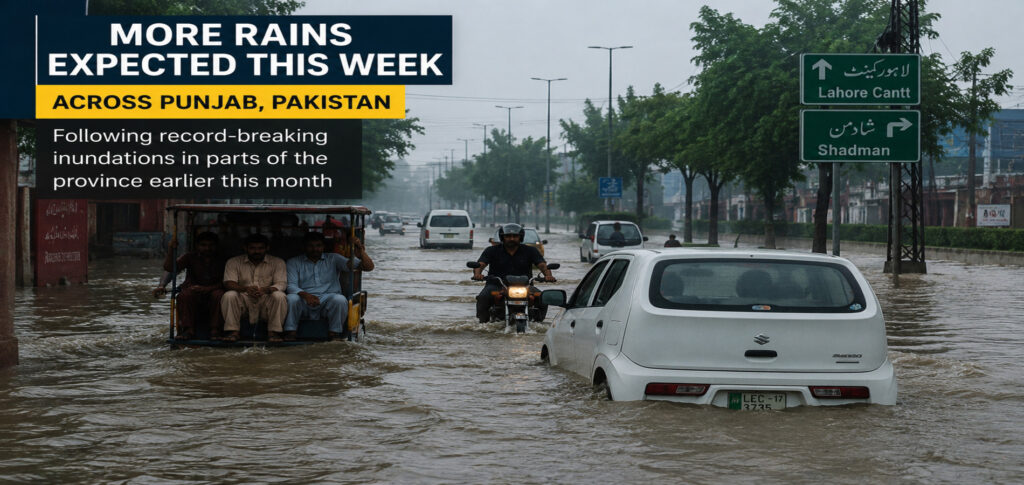
Flooding Creates Crisis Across Punjab
Floodwaters have spread across large parts of Punjab, particularly around Lahore and Gujranwala, leaving vast areas underwater.
Officials estimate that nearly 400 square kilometres of land are currently submerged, creating what one senior irrigation official described as an “inland sea.”
In response, authorities have established at least 17 flood relief camps in Lahore to accommodate families forced to evacuate their homes.
Punjab Chief Minister Maryam Nawaz Sharif said emergency teams remain deployed throughout the province, working around the clock to drain floodwaters and assist affected communities.
More Rain Expected This Week
The Pakistan Meteorological Department said river levels remain mostly within normal limits, although the Ravi River is currently flowing at a medium flood level.
Weather experts expect relatively calmer conditions until Tuesday before another strong weather system arrives on Wednesday, bringing fresh rainfall to Islamabad, upper Punjab, Khyber Pakhtunkhwa, Gilgit-Baltistan, and Azad Jammu and Kashmir.
Authorities have urged residents living near rivers and low-lying areas to remain alert and follow official evacuation instructions if conditions worsen.
Poor Urban Planning Increases Flood Risk
Rapid urban expansion and inadequate drainage systems have made many Pakistani cities particularly vulnerable to flash floods.
Unplanned housing developments and overcrowded neighbourhoods often lack proper flood management infrastructure, increasing the risk to residents during periods of heavy rainfall.
The current disaster has once again highlighted the country’s ongoing struggle to cope with increasingly extreme weather events linked to climate change.
Authorities Remain on High Alert
Emergency services continue rescue and relief operations across affected districts as officials monitor river flows and weather forecasts.
With Pakistan’s monsoon season expected to continue until September, disaster management authorities say communities should remain prepared for further heavy rainfall, flash floods, and infrastructure damage in the coming weeks.